
MPV Holiday • South Bandung Highland Volcanic Guide
Kawah Putih Ciwidey
The Mystical Turquoise Crater of Mount Patuha — Pale sulfur beaches, misty volcanic caldera at 2,430m, Ponton Floating Pier, Skywalk Cantigi, and Sunan Ibu Sunrise.
Mount Patuha Highlands, Ciwidey
Indonesia’s Most Ethereal Volcanic Crater Lake
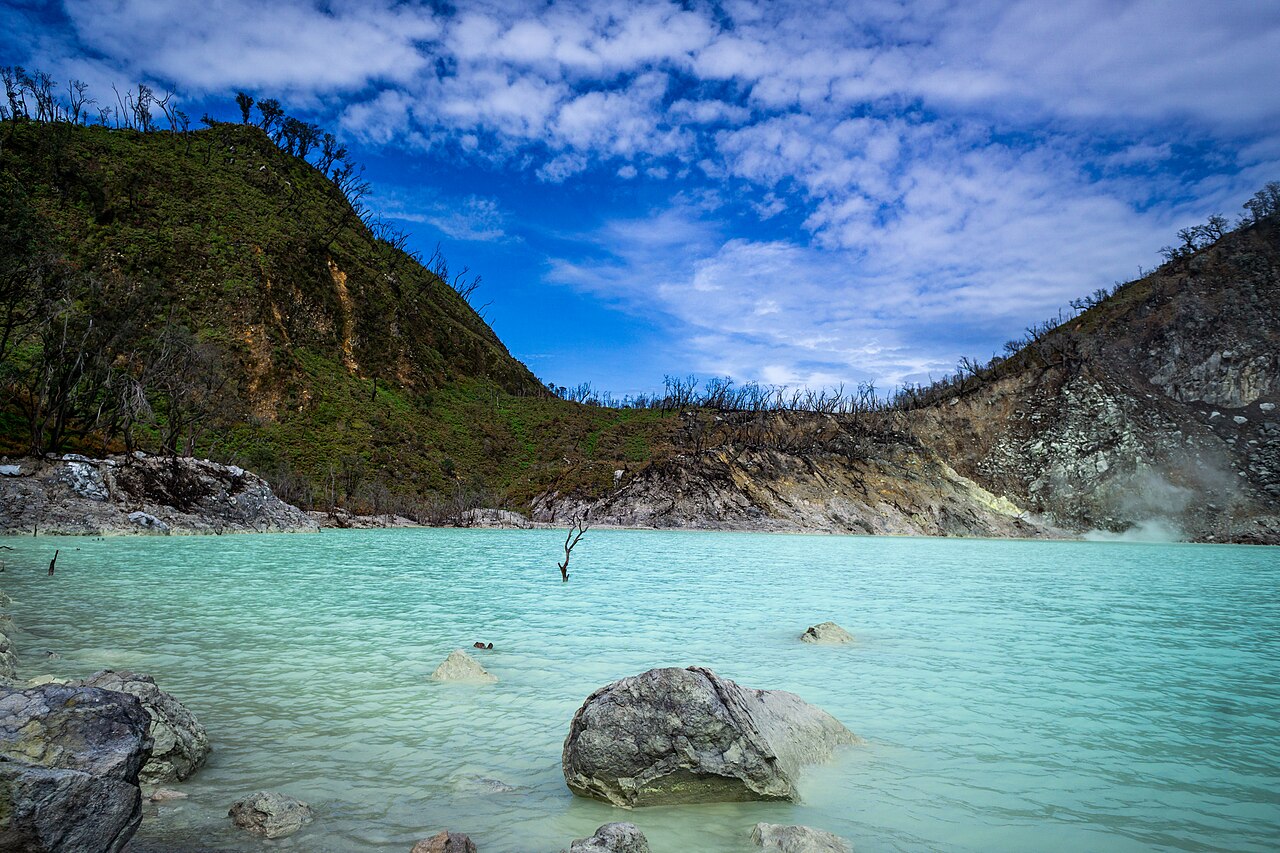
Resting high on the volcanic slopes of Mount Patuha at an elevation of 2,430 meters above sea level, Kawah Putih (The White Crater) is South Bandung’s most celebrated natural wonder. Stepping out onto its crater rim feels like entering another realm: surreal, milky turquoise waters are ringed by chalk-white sands, steaming sulfur vents, and steep volcanic cliffs crowned with dark endemic mountain vegetation.
The crater lake shifts in tone depending on sulfur saturation, sun angle, and weather—transforming from luminous pale aqua and brilliant jade to eerie silvery-white. First documented by German-Dutch botanist Dr. Franz Wilhelm Junghuhn in 1837 after centuries of local folklore, Kawah Putih has grown into a quintessential must-visit highlight for international and domestic travelers exploring West Java.
Because the highland road from Bandung ascends through tight curves and winding tea estates, arranging door-to-door transit with an MPV Holiday private car rental or an all-inclusive Bandung tour package guarantees a warm, stress-free mountain journey with an experienced local driver.
Volcanic Origins & Discovery
1. What is Kawah Putih? Geology & Folklore
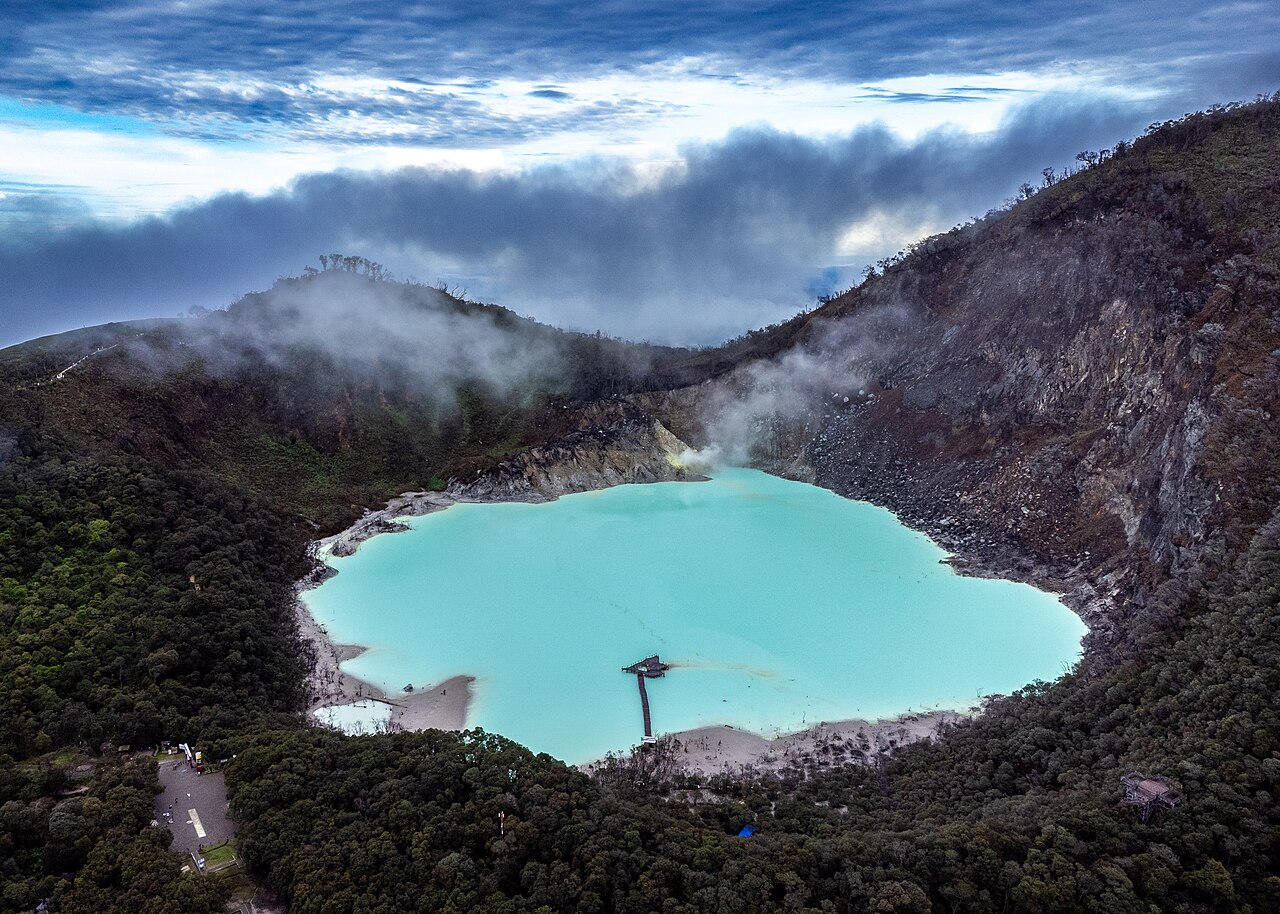
Kawah Putih is a crater lake created by the historical eruption of Mount Patuha (from Pak Tua, meaning "The Old Grandfather" in Sundanese) around the 10th to 12th century. The caldera is one of two craters on the peak, but Kawah Putih is the only one retaining a permanent, mineral-rich acid crater lake.
Key Characteristics of the Crater
- Extreme Acidity & Changing Colors: The water maintains an ultra-acidic pH between 0.5 and 1.3, heavily concentrated with sulfur, alum, and sulfuric minerals. As chemical concentrations and sunlight shift throughout the day, the lake fluidly morphs between jade green, milky turquoise, and ghostly white.
- The 1837 Junghuhn Rediscovery: For centuries, local villagers considered Mount Patuha taboo (angker), observing that birds flying over the summit mysteriously perished. In 1837, naturalist Dr. Franz Wilhelm Junghuhn ascended through dense jungle to investigate and discovered the vast sulfur lake. The mysterious bird deaths were quickly explained by dense volcanic sulfur gases venting into the atmosphere.
- Alpine Caldera Climate: Perched near 2,500m elevation, daytime temperatures hover around 8°C to 18°C, offering refreshing alpine air markedly cooler than central Bandung or tropical Jakarta.
Iconic Viewpoints & Experiences
2. Key Highlights & Signature Vantage Points
Kawah Putih has developed several thoughtfully designed vantage points and wooden bridges that allow travelers to safely witness the lake from multiple elevations and perspectives:
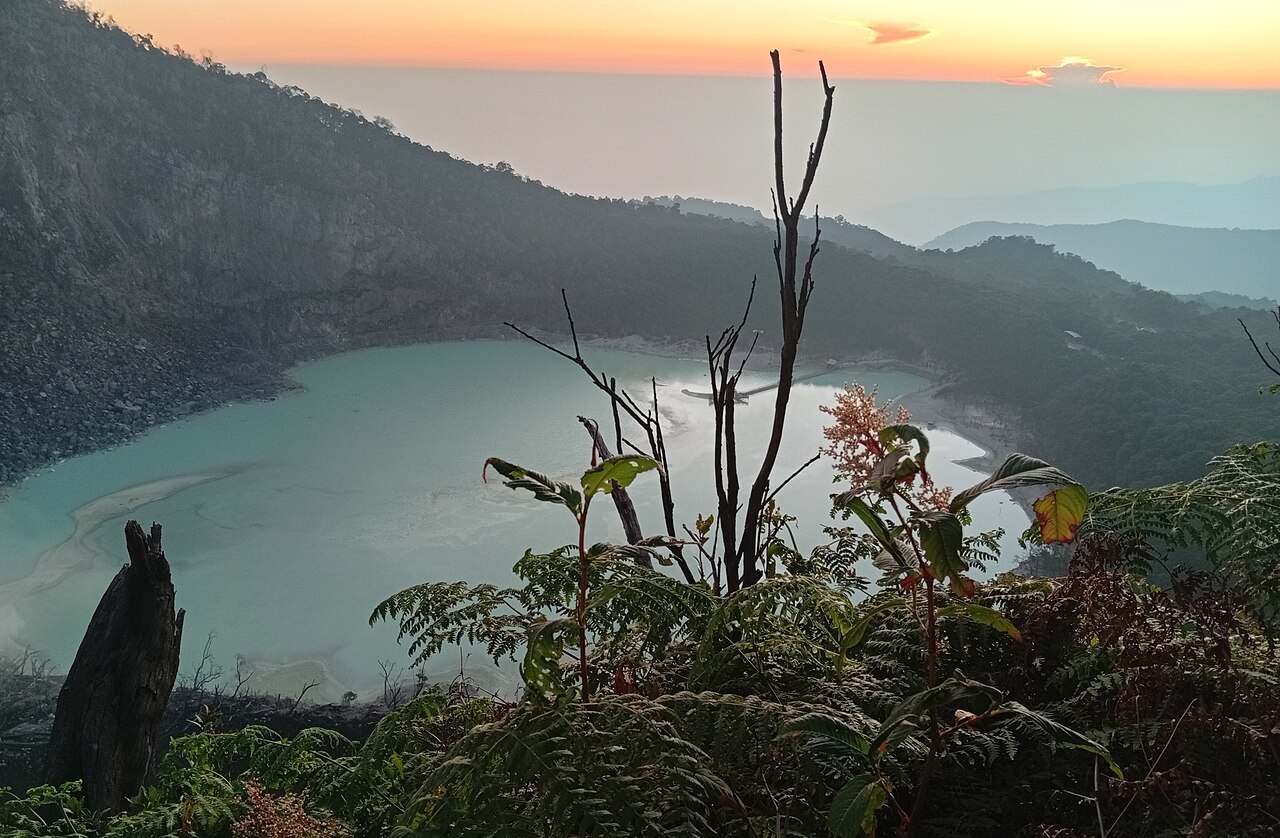
- A. Puncak Sunan Ibu (Sunrise Caldera Overlook) Rising high above the southern lip of the caldera, Sunan Ibu is the ultimate panoramic vantage point. Accessible via a short 15-minute uphill stair trail from the upper terminal, this elevated platform looks directly down over the entire turquoise crater as morning sunlight breaks over Mount Patuha’s sea of clouds. Special sunrise access is available from 04:30 AM for photographers and early-morning explorers.
- B. Dermaga Ponton (Floating Wooden Pier) For an intimate view directly above the surreal lake surface, the park constructed Dermaga Ponton—a floating timber dock that extends roughly 50 meters straight out toward the center of the steaming turquoise water. Standing at the end of the pier surrounded by pale sulfur vapor provides an unforgettable 360-degree photo experience.
- C. Skywalk Cantigi A pair of elevated bamboo and timber boardwalks (Skywalk Cantigi 1 & 2) meandering through the dense endemic Cantigi forest along the crater rim. These walkways suspend you above the rugged volcanic slopes, offering shaded viewpoints overlooking the white sulfur flats and distant caldera walls.
- D. The Lower Crater Floor & Sulfur Flats Walking down the stone steps from the arrival plaza brings you directly to the water’s edge. Here, the white sulfuric sand crunches underfoot, fumaroles hiss quietly along the rock walls, and the raw geothermal power of West Java feels tangible.
Transport Logistics & Ticketing
3. How Access Works: Gerbang Bawah & Ontang-Anting
Kawah Putih operates on a two-tier entry system between the lower main entrance gate (Gerbang Bawah) and the upper crater terminal (Pusat Kawah), situated approximately 5 kilometers apart along a steep mountain road through protected eucalyptus and pine forests.
Option 1: The Ontang-Anting Shuttle (Recommended)
Your private driver parks comfortably at the expansive lower parking terminal. You then board the official Ontang-Anting—colorful, open-sided modified minibuses operated by the park.
- Cost: Approx. Rp 29,000 / person (Round-Trip).
- Experience: Enjoy the crisp mountain breeze and scenic forest canopy on a fun 10-minute climb.
- Frequency: Shuttles depart continuously every few minutes as they fill.
Option 2: Private Vehicle Entry to the Crater
Travelers with elderly companions, small infants, or specialized photography gear can elect to have their private vehicle drive all the way up to the upper crater parking area.
- Cost: Approx. Rp 162,000 / car (Parkir Atas / Vehicle access permit).
- Convenience: Maximum comfort and zero waiting time, direct door-to-door access to the crater steps.
- Individual entrance tickets per passenger still apply.
Comprehensive Pricing & Attraction Fee Matrix
Endemic Botanical Heritage
4. Ecology: The Ghostly Cantigi Trees & Sulfur Flora
The environment around Kawah Putih is starkly shaped by high altitude, cold temperatures, and airborne sulfur dioxide. This harsh geochemical landscape has fostered a unique botanical ecosystem found on very few mountain peaks in Java:
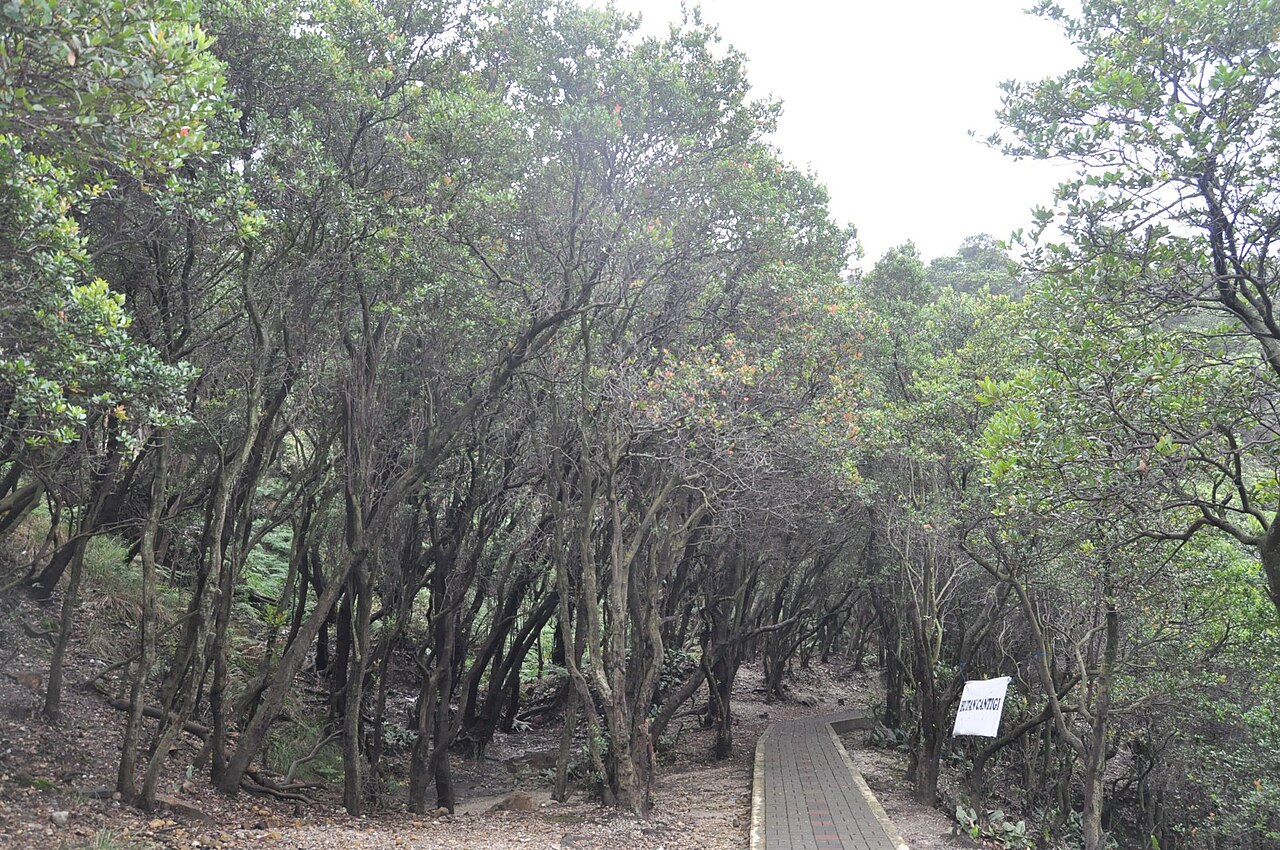
Cantigi Gunung (Vaccinium varingiaefolium)
The dominant tree species encircling Kawah Putih. Over decades of sulfur exposure, the lower branches bleach into gnarled, leafless charcoal-gray sculptures, while the upper canopies produce reddish young leaves. They give Kawah Putih its iconic, hauntingly beautiful photographic aesthetic.
Javanese Edelweiss & Alpine Moss
Clinging to the rocky volcanic crags are clumps of resilient alpine mosses, lichens, and protected mountain edelweiss flowers that thrive where most tropical plant life cannot survive.
Visitor Wellbeing & Safety
5. Health, Safety & Sulfur Gas Guidelines
Because Kawah Putih is an active geothermal caldera emitting natural sulfur dioxide (SO&sub2;) vapors, keeping these safety practices in mind ensures a comfortable and pleasant excursion:
- Recommended 15–30 Minute Crater Stay Park rangers advise spending around 15 to 30 minutes at the lowest crater basin near the water before moving up to the elevated terraces or viewing pavilions. Prolonged exposure to heavy sulfur fumes can cause mild eye irritation or lightheadedness.
- Masks Are Strongly Recommended Always carry a medical face mask or fabric bandana. If sulfur vapors drift toward the walking paths on wind shifts, wearing a mask makes breathing significantly more comfortable. Local vendors also sell masks near the ticketing gate.
- Asthma & Respiratory Sensitivity Travelers with pre-existing respiratory conditions (such as asthma or chronic bronchitis), pregnant women, and very young infants should stay on the upper viewing platforms where airflow is open and sulfur concentration is minimal.
- Never Touch or Drink the Water The vibrant turquoise water is a concentrated sulfuric acid solution with a pH as low as 0.5. Strictly avoid stepping off designated paths, wading into the shallows, or touching the water.
- Warm Layered Clothing At 2,430m, winds are brisk and temperatures can drop rapidly down to 10°C when fog rolls across the caldera. Bring a windbreaker, warm jacket, or cozy sweater.
Curating Your South Bandung Day
6. Perfect Pairings: The Ultimate Ciwidey Itinerary
Because Kawah Putih is best experienced early in the morning before afternoon clouds arrive, it serves as the ideal anchor for an exhilarating full-day South Bandung loop:
Kawah Rengganis & Suspension Bridge
Just 20 minutes further southwest, walk Southeast Asia’s longest suspension bridge (370m) and soak in authentic natural hot sulfur mud pools amidst tea hills.
Ranca Upas Deer Conservation
Located right beside the lower Kawah Putih gate. Hand-feed friendly Javan deer with fresh carrots in a wide highland meadow framed by eucalyptus forest.
Situ Patenggang & Pinisi Resto
A serene natural mountain lake famous for the iconic multi-deck wooden Pinisi ship restaurant resting atop rolling green tea plantations at Glamping Lakeside.
Rancabali Tea Estate & Strawberries
Stroll along scenic wooden tea boardwalks, take panoramic drone shots across emerald green valleys, and pick fresh sweet Ciwidey strawberries right from local farms.
Insider Knowledge
7. Practical Visitor Tips & Insider Advice
- Arrive Early (07:30 AM – 09:30 AM) Highland fog and mountain clouds typically begin rolling over Mount Patuha by midday, reducing visibility. Arriving between 7:30 AM and 9:30 AM offers clear blue skies, mirror-like reflections on the turquoise water, and fewer tour groups.
- Footwear Selection The path down from the shuttle terminal consists of stone stairs and unpaved volcanic gravel. Wear sturdy sneakers or closed-toe walking shoes. High heels and slippery sandals are not recommended.
- Camera Gear & Electronics Sulfur vapor can react with silver jewelry and delicate camera sensors over prolonged exposure. Keep lenses capped when walking through thick vapor plumes, and avoid wearing pure silver accessories to the crater bottom.
- Cash & QRIS Convenience While the official ticketing windows accept QRIS and debit cards, small cash bills are indispensable for street food vendors (steamed sweet corn, bandrek, toasted sticky rice), hot tea stalls, and clean public restrooms.
- Traffic & Weekend Departure Times Weekend travel from Bandung to Ciwidey takes roughly 1.5 to 2.5 hours via the Soreang-Pasir Koja (Soroja) Toll Road. Departing Bandung at 06:30 AM guarantees an easy run before morning weekend traffic builds.
Fast Facts
8. Practical Visitor Information
Witness the Volcanic Wonder of Kawah Putih
From eerie morning mists to radiant turquoise waters framed by Mount Patuha’s prehistoric caldera, Kawah Putih remains West Java’s most hypnotic natural spectacle. Experience it smoothly with a reliable private driver who handles the mountain roads while you take in the views.